Wednesday, June 22, 2022

Setting off on the Journey / Parasha Bamidbar


Our parasha opens with Israel encamped around Mt. Sinai. It has been 25 months since the Exodus from Egypt and they have been at Mt Sinai for a year and a half. It is time for them to set off for the land of their ancestors, the Land of Canaan.

This recalls a cartoon by the artist Mari Andrew. She shows us two identical drawings of a woman, holding a suitcase, staring at the road in front of her. On one side, she stares at an empty road ahead, and the caption reads: “I’m leaving.” The other road leads to a city, with trees and buildings, and clearly a sense of excitement. That caption reads: “I’m expanding.”

As we embark on a new journey, we often have two disparate feelings. One, a sense of discomfort, of anxiety, and of loss as we uproot ourselves from the familiar and normal routines of our lives and set off on to a destination we do not know.  

We can imagine our ancestors at Mt. Sinai having to choose which road to take… we can imagine their having  a sense of  dread and foreboding, as elsewhere in the Bible the Wilderness of Sinai is described as:

…..A land of deserts and pits,

A land of drought and darkness,

A land no man had traversed,

Where no human being had dwelt…

We can also imagine the Israelites at Mount Sinai having  a sense of hope,  of new possibilities  awaiting.  us. Indeed, it is in The Wilderness that the Israelite receive the Torah and where they develop their relationship with G-d. Why would G-d choose such an inhospitable, barren and forbidding place to give the Jewish people the Torah? We declare in our Torah service – Ki Mitzion Tetze Torah , which means that – The Torah “goes out” to the world from Jerusalem. Yet, God decided to give the Torah to the Jewish people in the wilderness. Would it not have been better to wait until they reached the Holy Land to bestow the Holy Torah upon the Holy People?

Our Rabbis teach that the Torah was given in the wilderness because just as nobody owns the wilderness, so no people have exclusive right to the Torah. We can own the Torah, but we are not its owners. It is free and is open to all. One does not have to be Jewish to learn from or be inspired by the Torah.  

This is a lesson to take to heart when it comes to our non-Jewish  family members, friends, neighbors… Maybe some of us think of their participation in our rituals and celebrations as primarily supporting roles in our Jewish spiritual lives or our sense of belonging to the community. Less often, perhaps, do we consider their participation as having a personal meaning for them.  One non-Jewish woman commented that when she recited the Shema with her Jewish family, she was reminded of the Jews throughout history who could not recite this prayer in safety and security. She also noted that the Shema was something she could say about God that felt true and authentic to her. Jewish practice and study can be nourishing and sustaining, can provide a sense of belonging and believing, not just to Jews but to non Jews as well . . At our synagogue we often host guests during services from different colleges and different religious backgrounds. In the process of learning more about Jewish prayer and ritual, they also learn a little Torah. Some go on to study with us on a weekly basis. Some come a few times; others, for years to study Torah with us.

 If any person comes to study Torah out of a search for truth, or to deepen his or her relationship to G-d, then they should be encouraged to explore the wisdom that Judaism has to offer. The Torah, as it states in the Book of Deuteronomy, is a “Morasha Kehillat Ya-akov” – “A precious inheritance of the Jewish People”. It is an inheritance worth sharing with the rest of humanity.

Shabbat Shalom

 Photo by Mantas Hesthaven on Unsplash


Thursday, May 26, 2022

A Reflection on the Texas School Shooting


 Yet once again the nation is shuddering and reeling after the massacre of 19 elementary school children, second, third and fourth graders, and two of their teachers, on May 24, at Robb Elementary School in Uvalde, Texas. This occurs on the heels of the massacre of ten Black Americans, on May 17, doing their grocery shopping in Buffalo NY. This school shooting is the  27th this year and the 212th mass shooting in the United States since the beginning of 2022.


There are no words to convey how incomprehensible this is, how  shaming it feels that mass murder has become a predictable part of American life. Our hearts go out to the parents that are experiencing the unimaginable grief of losing a child to violence; to the brothers and sisters of those who were killed whose lives are forever changed; to the teachers and fellow students of the Robb Elementary school who will carry the trauma of the day for the rest of their lives. Our prayers are with  the thousands more who are re-experiencing the loss of loved ones to gun violence. How scary to think that our own children and grandchildren are not safe when we send them to school, that we are not safe in our synagogues and churches and mosques, that we are not safe on the streets,  supermarkets, parks, and theaters of our communities.  


A letter written by Albert Einstein in April 1945 captures the mood of our country today. Einstein wrote this to friends who had unexpectedly lost a child: “When the unexpected course of everyday life is interrupted, we realize that we are like shipwrecked people trying to keep their balance on a miserable plank in the open sea, having forgotten where they came from and not knowing whither they are drifting”.


This seems to me to be an apt description of our nation at this time. We seem to have forgotten where we came from. We are adrift at sea, not knowing where we are going. What do we say to ourselves and to each other, about this horrific tragedy and about the direction of our country?  How does Judaism sustain us at times like this? 


A fundamental Jewish belief is the belief in human freedom. “We are what we choose to be,” writes Rabbi Jonathan Sacks. “Society is what we choose to make it. The future is open. There is nothing inevitable in the affairs of humankind……..To be a Jew is to be an agent of hope in a world serially threatened by despair.”


To be a Jew is to believe that things can get better and that we have the power to help make it better. To be a Jew is a protest against the blind acceptance of fate and an affirmation of the ability of the human will to mold the world into how it should be, how it could be. To be a Jew is to turn our sense of helplessness into action, our anger into deed, to allow our fears to give way to hope. 


Rabbi Marc D. Rudolph


Thursday, April 7, 2022

Be Mindful and Multiply (Parasha Tazriah/5782)


I am going to do something tonight that I have never done before when delivering a sermon. I am going to deliver a sermon I have delivered before. Well, that is not quite true. What I have never done before is to TELL YOU that I am giving a sermon that I have given before! And yet… Even that is not exactly true. The sermon I am about to give is an update of a sermon I gave ten years ago. I need to update it because so much has changed over the past ten years since I originally delivered it to you.

Recently I met in my office with a young Jewish couple who were trying to find a rabbi to marry them. After getting to know one another, they asked me to perform the ceremony, and I readily agreed.  They then asked me a question.  “What are your non-negotiables? “ Non-negotiables, I asked, what did that mean?  They told me that other rabbis they had met with had "non-negotiable" demands from the couple in order to perform the marriage.  One rabbi insisted they meet with him for pre-marital counseling over a series of sessions.  Another wanted them to undergo psychological testing for marriage readiness.  A third insisted they see a financial advisor before the wedding.  Without thinking much about it, I told them I had no "non-negotiables".  This couple, in their early thirties, had been dating for ten years and living together for five.  They were pretty experienced as a couple.  Then I realized that I did have one "non-negotiable".  Before I performed the ceremony, I said, I wanted them to get screened for Jewish Genetic Disorders. 

In fact, genetic screening should be a routine part of planning a wedding for any Jews of Ashkenazi or Sephardi descent who intend to have a family.  The reasons? At least one in four individuals in the Ashkenazi Jewish population is a carrier for a "Jewish" genetic disorder.  Although not as prevalent,  these disorders are also more common in Individuals of Sephardi Jewish descent -- those whose ancestors are from Spain, Portugal, North Africa, the Mediterranean or the Middle East. Twenty years ago, we were able to test for only four disorders.  Today,  we are able to test for fifty-one conditions for individuals  of Jewish ancestry. In addition we can also test for  210 other conditions that are inherited in a recessive fashion and can be tested for. 

This recommendation does not apply only to those who identify as Jewish. Being of Ashkenazi or Sephardi descent means that you have one Jewish grandparent. And although genetic disorders are more prevalent in Jewish individuals, non-Jews may also carry recessive genes for these disorders. Therefore, even those Jewish men and women who are planning to have a child with a partner who is not Jewish should consider genetic testing. 

By now you may be wondering why I am speaking about this on this Shabbat.  This week's parasha, Tazria, deals primarily with a skin affliction called Tzara'at in Hebrew. This is commonly translated as "leprosy".  The rabbis felt that one could prevent Taara'at and other afflictions either by abstaining from spiritual trespasses, like gossip, or by looking after our health and the health of our families.  In the case of Jewish genetic disorders, knowledge is the key to prevention, and  fortunately we are  capable of educating those who we care for the most.

How does one go about getting screened?  Ten years ago, when I spoke to you about this, I encouraged couples to attend a dinner at a Northbrook synagogue sponsored by the Sarnoff Center for Jewish Genetics. The dinner cost $180 and couples could attend an educational presentation and get tested there. Ten years later. Ie.today,  there is no need to schlepp up to Northbrook, no need to shell out $180 for dinner, no need to socialize with other people. Today, the first step is to register online at the Sarnoff Center for Jewish Genetics. Once you register, you are directed to an online education program that prepares you for the testing. One or both individuals then provide a saliva sample and mail it to a laboratory for testing. In two to three weeks a genetic counselor calls with the test results and provides  counseling if necessary. 

Ten years ago, the cost of this screening could be upwards of $3000. Today, the cost for those with health insurance will be just $49 per person. 

A couple does not have to go through the Sarnoff Center for Jewish Genetics to get tested. Unlike ten years ago, today companies offer carrier screening panels through direct-to-consumer (DTC) testing. This means that you order the testing yourself through their website, and results are released to you directly. The Sarnoff Center’s program differs through its educational component, a one-on-one phone call to make sure you understand the testing process and can have any questions or concerns addressed. They also offer a follow-up with the Center’s genetic counselor to ensure you understand the results.

As we pursue the mitzvah of "be fruitful and multiply" it is crucial that we remember the role of genetic testing and counseling in helping couples make informed decisions about their family's future.  Knowledge is indeed power.  Please do your part to get the word out so that these preventable diseases can indeed be prevented.

Shabbat Shalom

Rabbi Marc D. Rudolph   

Photo by Sangharsh Lohakare on Unsplash

SOZ 4/18/26


Tuesday, March 29, 2022

The Hidden Meaning of Keeping Kosher? Parasha Shemini/5782


In one of our most beloved prayers at Friday night services, Ahavat Olam, we sing the following: “Torah u-mitzvoth, chukim u-mishpatim, otanu limadetah” – “You teach us torah, mitzvoth, chukim and mishpatim”. We all know what torah and mitzvoth are! “Torah” in this prayer stands for all of Jewish learning, not just Bible learning. Mitzvoth, of course, are the good deeds that govern our behavior. “Chukim” and “Mishpatim” are subsets of “Mitzvoth”. Mishpatim are the Mitzvoth for whose reasons are readily understood.  For example,“You shall not murder”, or mitzvoth that enjoin us to take care of the poor and needy in our society – without these “mishpatim”, these laws, society cannot function. “Chukim” are the laws that, as Rashi puts it, are like “decrees from a King”. No society would think to implement these laws unless they came from an absolute ruler. An example of this kind of law is found in this week’s Torah portion.


Without attempting to justify or elaborate, our parasha this week gives a lengthy list of foods which are Kosher and those which are not. Since very early in our history, Kashrut laws have been at the very center of our heritage.  The Rabbis classified these laws as "Chukim", laws that had to be obeyed although they transcend human understanding. Why, for example, if G-d is the Creator of All, and pronounced all of Creation “good” does G-d prohibit Jews from eating some animals? God doesn’t want His people to enjoy shrimp? Can God not suffer the messiness of seeing His Chosen struggling to  extract lobster meat from its shell? The issue is complicated by the fact that the Torah gives no rational reason for the laws of Kashrut. It is like the decree of a King, or the rules of a parent to a toddler – “do it because I say so”. 


The fact that no reasons are given for the laws of kashrut has not stopped Jews throughout the ages from attempting to discover some rationale behind them. One method of understanding kashrut was to allegorize, or understand the kosher laws symbolically.  For example, the Torah only permits us to eat fish with scales and fins. The rabbis of the Talmud noted that scales protect the body of the fish. They are like the fish’s armor, so to speak.  Thus they represent the quality of integrity, that which keeps the human being from falling prey to the many moral pitfalls that life presents. 


The fins propel a fish forward. The fins represent the human drive for achievement, the impulse to make ourselves better, to build our lives, and to make a better world. 


Therefore, one way to understand the commandment to only eat fish with scales and fins is that God wants us to constantly be aware that integrity must always be paired with our drive to accomplish things in this world. A person with ambition but without integrity might become successful, but might achieve that success through “unkosher” ways. A person with integrity but without ambition will never reach their spiritual potential in this world.

To paraphrase  the English poet Samuel Johnson:

"Integrity without [ambition] is weak and useless, and [ambition] without integrity is dangerous and dreadful.”

One danger to this type of inquiry is that we might think that once we have understood the lesson that the law is trying to teach us, we no longer need to follow the law! In fact, one of the earliest Christian writings, the Epistle of Barnabus, concludes that the point of the dietary laws is not to refrain from eating certain foods, it is to teach us ethical and moral values. The laws were never meant to be observed literally, Barnabus claims. Therefore, those Jews who actually observe the laws are misguided.


Ultimately, Jews will choose to follow all of the laws of kashrut, some of the laws of kashrut, or none of the laws of kashrut for their own reasons and own rationales. It is interesting to note that the Torah provides only one reason for following the laws of Kashrut – “I am the Lord your God”. In the words of the 19th century German rabbi and thinker, Samson Raphael Hirsch, “You should observe the commandments of the Torah and have regard for its laws, because they are at God’s behest, not because you think them correct. Even those commandments whose reason you believe you have understood, you should not fulfill because of your understanding, for then you would be listening only to yourself, whereas you should listen to God [alone]”

Shabbat Shalom

Photo by Gregor Moser on Unsplash


Sunday, March 20, 2022

The First Bat Mitzvah/Parasha Tzav


                                                                                                                                                                                                                   My friend and colleague, Rabbi Linda Targan,                                                recently published a memoir on becoming a female rabbi. 

This Shabbat we are celebrating the Bat Mitzvah of Sofia Immergluck. Coincidentally, This Shabbat, March 18, 2022, also marks the 100th anniversary of the very first bat mitzvah that took place here in the United States. On Shabbat morning, March 18, 1922, Judith Kaplan, daughter of Rabbi Mordechai Kaplan, stood before the congregation and chanted the text from the Torah portion of the week.  Her synagogue, the Society for the Advancement of Judaism was on West 86th Street in New York City.  This first Bat Mitzvah was different from what Sofia will do tomorrow. Sofia will chant directly from the Torah scroll. She will chant from the Prophetic portion for the week. Sofia will give a speech - a “devar torah” that she wrote analyzing the Torah and Haftorah and connecting it to her own life. And she will  help lead our services – all, of course, up here, on the bima. 

In 1922, Twelve-year-old Judith Kaplan stood below the bima, on the floor of the sanctuary. The Torah scroll was in sight, but covered. She was not allowed to touch the scroll. Judith chanted the blessing before reading the Torah, then read the Torah text out loud, first in Hebrew and then in English. She read from her own personal chumash  which she held in her hand.  She then chanted the blessing after reading the Torah. That was her bat mitzvah ceremony. No lavish dance party afterward. No themes. No flood of gifts. 

As brief and as limited as this bat mitzvah was, it was still an auspicious beginning on several levels. No girl had ever had a bat mitzvah before! In Jewish law, a girl reaches the age of maturity at 12 and a boy at 13. We mark the occasion of a boy reaching legal maturity with a bar mitzvah. But, prior to Judith Kaplan’s bat mitzvah, no girl had  bat  a bat mitzvah ritual to mark this milestone. Her father, Mordechai Kaplan, had intended his daughter’s bat mitzvah as the beginning step of  a movement in Judaism to give females equal status to that of males in Jewish ritual life. He sought to encourage the education of  girls so that as grown women   that they could teach their own children about Judaism.  As you can imagine some people had a difficult time accepting this modern and rather revolutionary  idea.  As an adult Judith Kaplan later recalled, “[My bat mitzvah] was enough to shock a lot of people including my own grandparents and aunts and uncles.”

It took a long time for the idea of a bat mitzvah to catch on. The Reform Movement developed  “Confirmation'' in which young men and women marked the conclusion of their formal synagogue education in a group ceremony at the age of 15. It wasn’t until the late 1960’s when the bat mitzvah became widespread in Conservative synagogues. Today the bat mitzvah is an important ritual in both Reform and Conservative synagogues as well. 

The “bat mitzvah” has also slowly been adopted by Centrist or Modern Orthodoxy. Today in these communities boys and girls are given the same kind of rigorous Jewish education.  In addition, in many Orthodox communities today the coming of age of a  girl  is marked by her delivering a drasha, or speech, to the community on the Shabbat morning following her 12th birthday. This teaching is the culmination of intense study over a  long period of time and  offers an opportunity to share her insights and wisdom publicly. In other Orthodox communities the bat mitzvah is allowed to read from the Torah in a service attended by women only. 

As bat mitzvahs became the norm in Conservative synagogues in the 1960’s the Conservative Movement began to grapple with  another central issue in Judaism – the  issue of women’s participation in services.  In traditional Judaism women are exempt from the obligation of attending and participating in religious services. This was the obligation of a man alone. But did it make sense  that a girl could be called to the Torah for her bat mitzvah, but the following week she could not be given an aliyah because she was a woman? This question  opened up yet another transformative development in Judaism –   the increased participation of women in ritual life. 

In 1972 Sally Priesand was the first American woman ordained as a Rabbi  by the Reform Movement, and in 1985 the Conservative Movement ordained Amy Eilberg as its first female rabbi. More recently,  we have seen a small number of women  ordained as rabbis through Modern Orthodox seminaries. 

The importance of what female clergy bring to Jewish life – whether they are rabbis or cantors – must not be underestimated. In a 2018 book exploring women in the clergy, Benjamin R. Knoll and Cammie Jo Bolin showed that women who grew up with female clergy had higher levels of self-esteem as adults. They also had lower levels of depression and anxiety. This research also shows that women who grew up with female clergy were more successful in developing relationships, had higher job satisfaction and were more  motivated for personal improvement than women who did not have a female clergyperson growing up. Women whose most influential youth congregational leader was female were more likely to be employed full-time as adults and had, on average, one year more of higher education than other women.

In our parasha for this Shabbat we read about the ordination of Aaron and his sons as priests in the Tabernacle. In Biblical times only males were ordained as religious officials. There were a number of female prophets in the Bible, but no female was allowed to become a priest and serve in the Temple. This reflects the patriarchal structure of society in which men held all of the religious and political power. 

Today, fortunately, much has changed. More than 1500 women have been ordained as rabbis around the world in the last 50 years. Women rabbis hold senior leadership positions in many synagogues, and women rabbi-scholars teach in rabbinic seminaries and in some cases head  rabbinic schools. Rabbi Hara Person, President and CEO of the Reform Movement’s Central Conference of American Rabbis, and herself a woman, estimates that today one half of the active rabbis in this country are female. And this does not even take into account the enormous influence and contributions that female cantors have played in American Jewish life. 

I started this sermon with an account of the first American bat mitzvah and have focused on the transformative  effect of women in the American Rabbinate. But the first woman  Rabbi ordained in modern times was not ordained in America. Her name is Rabbi Regina Jonas. Rabbi Jonas studied at a rabbinical seminary in Berlin in the early 1930s. As  part of her appeal to the Board of Directors that she be ordained, she wrote a thesis titled, “Can a Woman Be a Rabbi According to Jewish Law?” In her thesis she explored the Bible, the Talmud, and rabbinic literature and concluded that a woman could indeed be ordained a rabbi according to Jewish Law. The Board of Directors of the seminary disagreed and would not ordain her. She was privately ordained in Berlin in 1935 and is widely considered to be the first female rabbi. She perished in Auschwitz in 1944. 

Rabbi Regina Jonas was interviewed by a German Newspaper in June, 1938. Recalling her groundbreaking journey to become a rabbi, she said, “God has placed abilities and callings in our hearts, without regard to gender. Thus each of us has the duty, whether man or woman, to realize those gifts God has given.”

To that we can all say, “Amen”

Shabbat Shalom


Tuesday, March 8, 2022

Mental Health Shabbat/Parasha Ki Tissa


As we approach the 2-year anniversary of life with COVID, mental health statistics    reflect that the pandemic has had a profound impact on our minds, bodies, hearts, and souls. Depression, suicidal ideation, and anxiety have all increased among adults, adolescents and children. Appallingly nearly 25% of individuals who have a mental health illness report not receiving the treatment that they need.

Dr. Biana Kotlyar Castro is a psychiatrist, who specializes in electroconvulsive therapy, and is a consultation-liaison services   Dr. Castro highlighted the challenges of treating people with mental illness at the High Holiday services of Congregation Knesset Israel in Elgin this year.  She gives a moving description of her work: “I see patients, people at some of their lowest points in their lives. They are struggling and suffering from an unbearable burden. I wish more than anything that I could help quickly and completely. But the truth is, despite how far medications and biological treatments have come in the last couple decades for psychiatry, we cannot heal with these treatments alone. It’s a long road and even when psychiatric symptoms do lessen, the aftermath of the experience is often devastating. Patients must mend relationships that suffered, somehow find a way to return to work or school, many have significant consequences that they must deal with while often still in recovery. It’s a hard, uphill road to travel and often takes a long time, consistent effort and support from their village. Dr. Castro continues, despite how far we have come and what we know about the brain-mind connection, neurocircuitry and neurotransmitters; there are still people that believe mental illness is a moral failing or weakness. This couldn’t be further from the truth. Those who have dealt with mental illness are some of the toughest and strongest people I know,” she writes. 

Dr. Castro brings up the issue of shame which often follows people with mental health issues. Perhaps that is why few people seek out their Rabbis to talk about their struggles with mental health. We receive calls from friends, relatives and others telling us that someone is in the hospital with a physical illness. Yet we do not hear when people are suffering from debilitating depression or anxiety, from an eating disorder or obsessive-compulsive disorder. We hear about the birth of a baby but not about the mother who is suffering from postpartum depression. We hear about someone diagnosed with cancer but not someone diagnosed with bipolar disorder. As Jessica Evans, a blogger for the Jerusalem Post who identifies herself as a person who has mental illnesses writes, “You do not often see care committees focusing resources to help those struggling with horrible symptoms stuck at home or overwhelmed. There are no cards or brisket or challah sent over. No phone calls, just checking in or encouraging one to keep going.”

Let us not forget that our Bible is full of prophets and leaders who suffer from anxiety and depression. Perhaps the first person in the Torah who clearly suffers from depression is Rachel, Jacob’s wife. She sees her sister, Leah, giving birth to four children, yet she has not been able to get pregnant. She is envious of her sister and distraught about her situation. Her desperation to have a child leads her to plead with her husband, “Give me children, or I shall die.” Unfortunately, she does not get the support and understanding from her husband she needs to cope with her sadness. Rather, Jacob, her husband, answers with anger and impatience. He responds, “Am I God who prevents you from having children?” 

The Book of Samuel describes King Saul, the first king of Israel, as suffering from “ruach ra-ah” after he is told by the prophet Samuel that he would no longer be king. Rabbi Abravanel, a medieval commentator, describes “ruach ra-ah” as “melancholia, an illness in which sorrow, severe anxiety over one’s fate, and depression replace imagination and the ability to concentrate”. Meiri, another commentator, defines “ruach ra-ah” as hallucinations from which one flees madly. The Rambam defines it as “depression, where a person prefers to be isolated in a dark room.” In another writing the Rambam, Moshe Maimonides, calls mental illness “marah shehorah”, bitter darkness, and suggests treating it with music and walks in the garden or around beautiful buildings.

Perhaps the most well-known prophet in the Bible is Elijah the Prophet. We invite him into our homes during the Passover seder. We set aside a special seat for him at a bris. We invoke his name at Havdalah. 

In the Bible we meet him as a prophet in Northern Israel who fights against idolatry. He flees from the Queen of Northern Israel, who threatens to kill him. Exhausted, he journeys south to the Wilderness of the Sinai and finds rest under a broom tree. There, broken and depleted, he asks God to take his life. He feels he has been a complete failure. He has lost his will to live. He cannot go on. Despite his heroic efforts, he says, the Israelites have forsaken the God of Israel and have turned to idolatry. Judaism, he feels, has no future. He alone remains faithful to the Covenant, and he is the last of his kind. 

Elijah wants to give in to his depression, to be alone in the wilderness, to give up eating, to sleep and not wake up. But Elijah gets help. An angel comes to him, touches him, prepares him food, urges him to eat. Elijah does recover and returns to Northern Israel to continue his fight against idolatry. 

Rachel, King Saul, Elijah the prophet, and many other Biblical figures – including Moses – suffer from serious mental health issues in their lifetimes. But their illnesses do not prevent them from living full lives and making vital contributions to the Jewish people. Rabbi Nachman, the great grandson of the Baal Shem Tov who died in 1810, famously said “The world is a narrow bridge – do not be afraid”. Rabbi Nachman experienced intense swings of mood during his lifetime. Although he emphasized living life with joy and happiness, he also taught that one could find God even when one was emotionally low. Rabbi Nachman advised, “Struggle with your sadness. Struggle with your soul … the point is not to rid oneself of struggle, but to accept it as a condition of being human”.

When people do struggle with their sadness, and struggle with their souls, it is important that they do not do so alone. Like the angel that reached out and touched Elijah, fed Elijah, and comforted Elijah, we too must not leave the person struggling with mental illness to struggle with it alone. Rabbi Nachman teaches us that, like physical illness, mental illness is part of being human. It is nothing to be ashamed of. In being open about the struggles of Biblical figures, our religion is telling us that we must stop hiding our own struggles from the view of others or from ourselves. We must be the angels that lift them up, remind them we are there for them, encourage them to get professional help. We must be the angels that are patient and loving and compassionate with them and that, above all, do not get angry with them. 

Let those who are suffering in our congregation, and those who love them, hear this prayer: 

May the One who blessed our ancestors —

Who named us Israel (Yisrael), those who “struggle,"

Bless and heal those among us who struggle with mental well-being.

May they acknowledge their own strength and resilience in persevering,

May they treat themselves with forgiveness and patience,

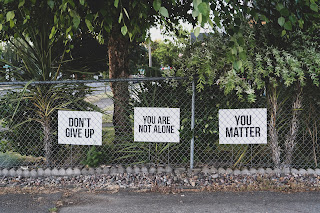
May they find others who share their experiences,so they know they are not alone,

May they find help, compassion and resources when they are able to reach out for them,

May they find others willing to reach out first when they cannot,

And may they find inclusive and welcoming communities that will uplift and celebrate them.

May the Holy One grant us the strength and resilience to support our loved ones,

May we find the patience and forgiveness we need for ourselves and others,

May we find solidarity and support from other caregivers,

May we find the capacity to listen without judgment and with the intention to help when asked,

May we find the ability to notice when others are struggling and reach out to them first,

And may we create communities that accept, support and keep company   with those among us who are struggling.

Let us say, AMEN.

Mi Sheberach Prayer


Sunday, February 27, 2022

Gathering for the Good of Ukraine פּרשׁה ויקהל


Our Parasha for this week begins with the words, “Moses gathered all of the people of Israel.” The word used for “gather” is “Va-yakhel”, [ויקהל] in Hebrew. The three-letter root of the word “Va-yakhel” – kuf, hey, lamed – is used to form another word in Hebrew – “Kehillah”. A “Kehillah” is a congregation. Sometimes you will see the letters “kuf-kuf” [×§״×§] before the name of a synagogue. These letters stand for the Hebrew words “Kehilah Kedosha”, [קהילה קדושׁה] which means “Holy Congregation”. 

When Moses gathers the people, he asks them to bring donations for the construction of the Tabernacle. He needs gold, silver, and copper, yarns and linens and goat skins, oil for lighting the Menorah, and spices for the aromatic incense. We are told that the people were so generous that Moses had to ask them to stop giving! 

Several weeks ago in our Torah reading we read of a different kind of gathering of the Jewish people, this time, in the Wilderness. When Moses was late in descending from Mt. Sinai where he was receiving the Ten Commandments, the people gathered – “Va-Yikahel” [ויקהל] – against Aaron and demanded that he make a Golden Calf to worship.  The people donated gold, and out of their donations Aaron fashioned a Golden Calf to worship. 

Of course, these two “gatherings” were very different. The gathering of the people which led to the construction of the Golden Calf incident consisted of a mob that assembled itself and threatened to kill Aaron if he did not do their bidding. Aaron cooperated as a delaying tactic, hoping that Moses would return before the people would descend into idolatry. In our parsha this week, Moses convenes an orderly gathering to solicit funds for building the Tabernacle. Still, these two gatherings elicit a wry comment from the rabbis of the Talmud. “What a peculiar people,” the Talmud says of Israel. “When solicited to build the tabernacle to worship the One God, they give generously. When solicited to fashion an idol, they give equally generously!”

A “Kehillah”, a gathering, can thus be organized for both positive and negative ends. When degenerating into a mob, a Kehillah can be very destructive. When organized for productive purposes, a Kehillah can build a home for G-d here on earth. Over time the concept of Kehillah changed and evolved.

 For example, In Eastern Europe, “Kehillah” was the name given to Jewish communal organizations. At times that organization would have quasi-governmental authority over the Jews of the community and its relationship with the local or national government. The kehillah might be an elected body that would levy taxes on the Jewish community and provide educational and social welfare services for the Jewish population. In the United States, the Jewish Federation of each Jewish community is the professional organization that became the “Kehillah” of each community. Today Jewish Federations across the United States assess the needs and requirements of their local Jewish communities and raise and distribute funds to where they are most needed and to where they will have the greatest impact. 


The reach of the Jewish Federations extends beyond local needs as well. Throughout my tenure here and in my many travels to Europe as part of the Rabbinic Mission through the JUF, I have witnessed firsthand the contributions of our Chicagoland Jewish community to the welfare of struggling communities in Europe. I have been to Ukraine twice on these missions – The first time to Kiev, the second time to Odessa. Tonight, our thoughts and prayers are with all the people of Ukraine, and particularly with our fellow Jews there.  i 


Jews have lived in Ukraine since the 8th century, when Jewish refugees fleeing from persecution in the Byzantine Empire. Persia, and Mesopotamia arrived and established homes. The Cossack uprising in the 1630s led to the infamous Khmelnitsky massacres in which 30,000 Jews perished and 300 Jewish communities were destroyed. The late 19th century saw the beginning of what became a periodic outbreak of pogroms that lasted for the next 40 years. Hundreds of thousands of Jews left Ukraine during this time, seeking new lives in the United States and other countries. Many of our grandparents and great grand-parents came from Ukraine during this time.  A series of pogroms of 1919 to 1923 killed over 100,000 Jews alone in Ukraine. One the eve of World War ll there were 2.7 million Jews living in Ukraine. By the end of World War ll only 840,000 remained. The rest were murdered by the Nazis and their collaborators. The years of Soviet repression led to further assimilation and emigration. In 1990 there were 500,000 Jews living in Ukraine. In the decade following the fall of the Soviet Union, 80% of the Jewish population left Ukraine, the largest number, over a quarter million, emigrating to Israel. 


As with much of Jewish history, Ukraine has not only been the scene of tragedy and destruction but a place of flourishing communities, of renewal and creativity as well. Ukraine was the birthplace of the Hasidic movement. The teachings of the Baal Shem Tov, born in 1698, the founder of that movement, have had a profound influence on Judaism all over the world.  Ukraine was the home to famous Yeshivot, centers of Jewish scholarship, and of many well-known rabbis. It was the center of the Haskalah, or Jewish enlightenment movement. Late 19th century Odessa was the Yiddish publishing center of the world. Famous poets and authors made their homes there – Chaim Nahman Bialik, Shalom Aleichem, Ahad Ha-am and Nobel Prize winning author S.Y. Agnon, to name a few. Odessa served as the center of the Hibat Zion movement, and early Zionist movement that called for the revival of the people Israel on the land of its ancestors. Odessa became the port of embarkation for Jewish emigration from Russia to pre-state Israel. It was called “The Gateway to Zion”. 

Today Ukraine is the home to 200,000 Jews. This makes it the 5th largest Jewish population in the world. Ukraine is the only country outside of Israel to have both a Jewish head of state, Vladimir Zelelnsky, and a Jewish head of government, Prime Minister Volodymer Groysman. Since the fall of the Soviet Union and the independence of Ukraine, there has been a remarkable revitalization of Jewish life in Ukraine. Ukraine today has about 75 Jewish schools in some 45 cities, among them 15 day schools and 80 Sunday schools, 11 kindergartens, 8 yeshivas, and some 70 Hebrew-language ulpanim. Synagogues and other religious and cultural institutions function in every place with a significant Jewish population. There are Jewish sponsored nursing homes, JCCs, Jewish sponsored orphanages, Hillels at Universities, Birthright trips, and Jewish summer camps. There are Jewish newspapers – ten of which are published in Kiev alone – and a Jewish television program on state-run television. 

With the Russian invasion of Ukraine, the country faces the prospect of political instability and all that comes with it – scarcity, chaos, the breakdown of law and order. Whenever this happens in a country, Jewish communities become especially vulnerable. This is where the “Kehillah” – the Jewish community organized for good – can make a difference.  The Jewish United Fund/Jewish Federation of Chicago, which members of our congregation helps to fund, has already advanced one million dollars to our partners in Ukraine to help support the Jewish community in Ukraine. Through our contributions, we are helping to provide 40,000 poor Jewish elderly and families, with food, medicine, winter relief and emergency assistance. We are helping to equip the staff of the field offices in Kiev, Dnipro, Kharkiv and Odessa with the ability to continue to reach the homebound with aid in the event of major disruptions of transportation. Keenly aware of the current relentless assault on the country, we are preparing to dispatch mobile medical units to get supplies where they are needed most. We are bolstering institutions to withstand the indiscriminate destruction, the   aggression, homes, businesses, and infrastructure that accompanies the breakdown of social order. We are helping those who are willing and able to emigrate to Israel to do so. 


People often ask me, “What can I do about a conflict so far away? I feel helpless." We can certainly offer our prayers for peace and for the welfare of the invaded and besieged Ukrainian people. But we can do more than that. We can make contributions to our Jewish United Fund that will go directly to those on the ground in Ukraine most able to help. In the words of the well-known prayer, recited in our congregation at many bar and bat mitzvahs, “We cannot merely pray to You, O’ God…..Therefore we pray to You instead/For strength, determination and willpower/ To do, instead of only to pray……” 

Shabbat Shalom